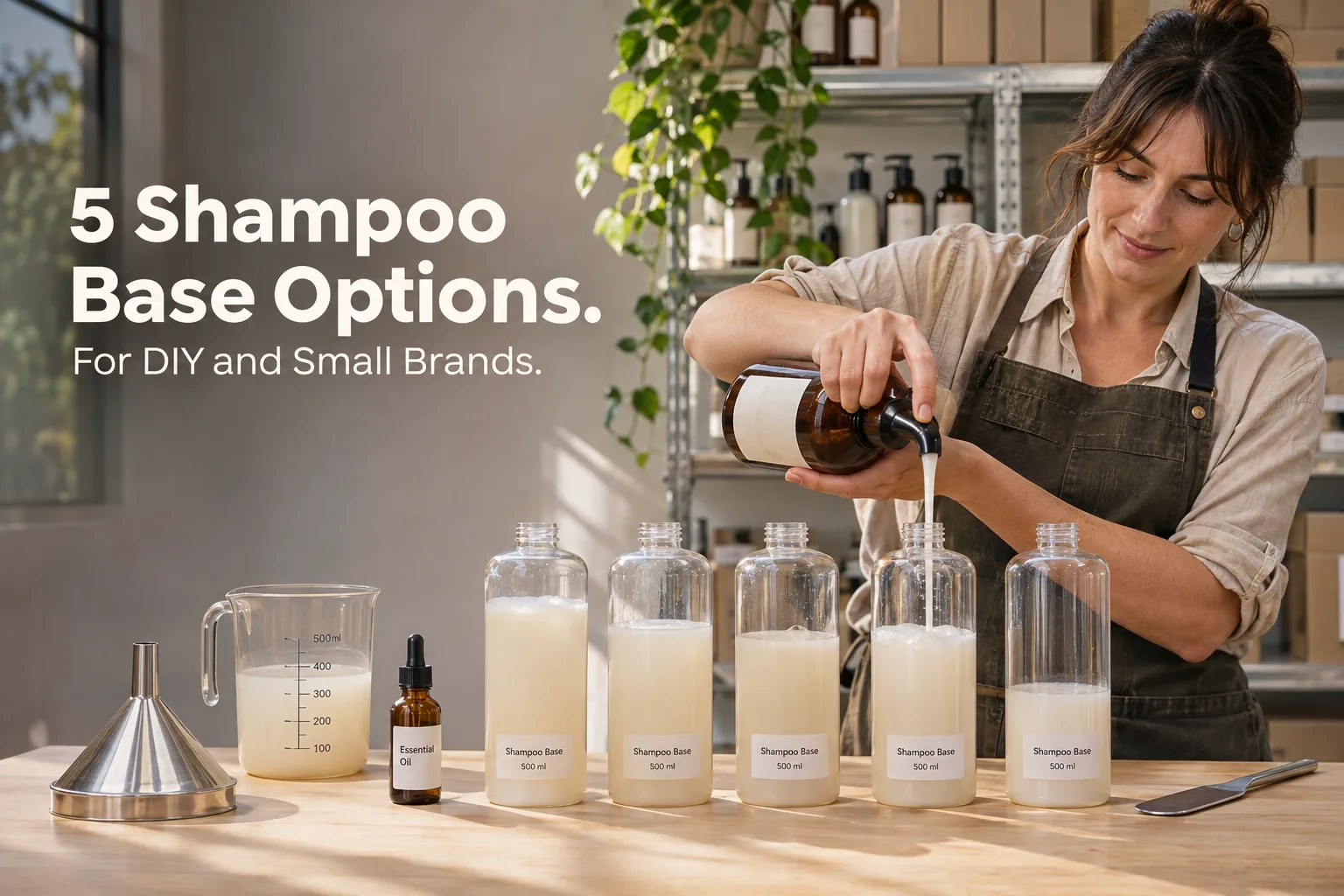
Choosing a shampoo base for a scented DIY batch or a small brand’s first product? Will it be used as supplied, or changed before bottling? What will the finished ingredient list contain? Start by defining the intended recipe and requesting the information needed to describe it accurately.
For comparison, use five purchasing briefs: ready-to-use, unscented, concentrated, conditioning and soap-based. Treat these as questions for suppliers, rather than a ranking of named products. Compare price, preparation instructions, proposed additions and ingredient information against the same intended batch.
1. A ready-to-use shampoo base
For a project intended to use a base without additions, make the first question specific: can this product be bottled and used exactly as supplied? Request written preparation instructions and the complete ingredient information before choosing it.
A hypothetical comparison might involve two candidates: one intended for use unchanged and another accompanied by mixing instructions. Record the preparation each supplier specifies. Do not assume that similar product names mean the same work is required.
For a small brand, also request pricing for the quantity being considered. Compare quoted costs against the amount of finished shampoo specified by the supplier, rather than assuming every container produces the same number of bottles.
2. An unscented shampoo base
For a project with a proposed scent, begin with two questions: is the candidate supplied without fragrance, and does the supplier provide instructions for adding the intended ingredient? If your enquiries include Range Products in Welshpool, ask the same specific questions about the candidate base. Ask about the particular oil or fragrance under consideration, rather than requesting a general assurance about customisation.
Before using an essential oils benefits chart to inform a scent choice, identify the exact ingredient being considered and ask whether the supplier’s instructions cover its use in the selected shampoo base. Keep the proposed addition and amount separate from any benefit claims intended for the bottle; a chart alone does not establish those claims for the finished shampoo.
For comparison, prepare an unchanged sample and a proposed scented version only where the supplier’s instructions support that preparation. Record the recipe for each. Leave claims about benefits out of the comparison unless there is support for those particular claims.
3. A concentrated shampoo base
For a project considering dilution, request the intended dilution instructions before calculating a cost per finished bottle. Ask whether the quoted price covers the concentrate alone and what other materials the specified preparation requires.
A worked hypothetical illustrates the purchasing decision. Candidate A is quoted per container; candidate B is quoted per kilogram. Before comparing them, request the finished quantity each would produce under its own instructions. Leave that field unanswered until the necessary information is available.
The comparison sheet should record the supplied quantity, preparation method, additional materials and intended finished quantity. Use the same proposed bottle size for both calculations. This makes the purchasing question concrete without assuming that every concentrate permits the same dilution.
4. A shampoo base with conditioning ingredients
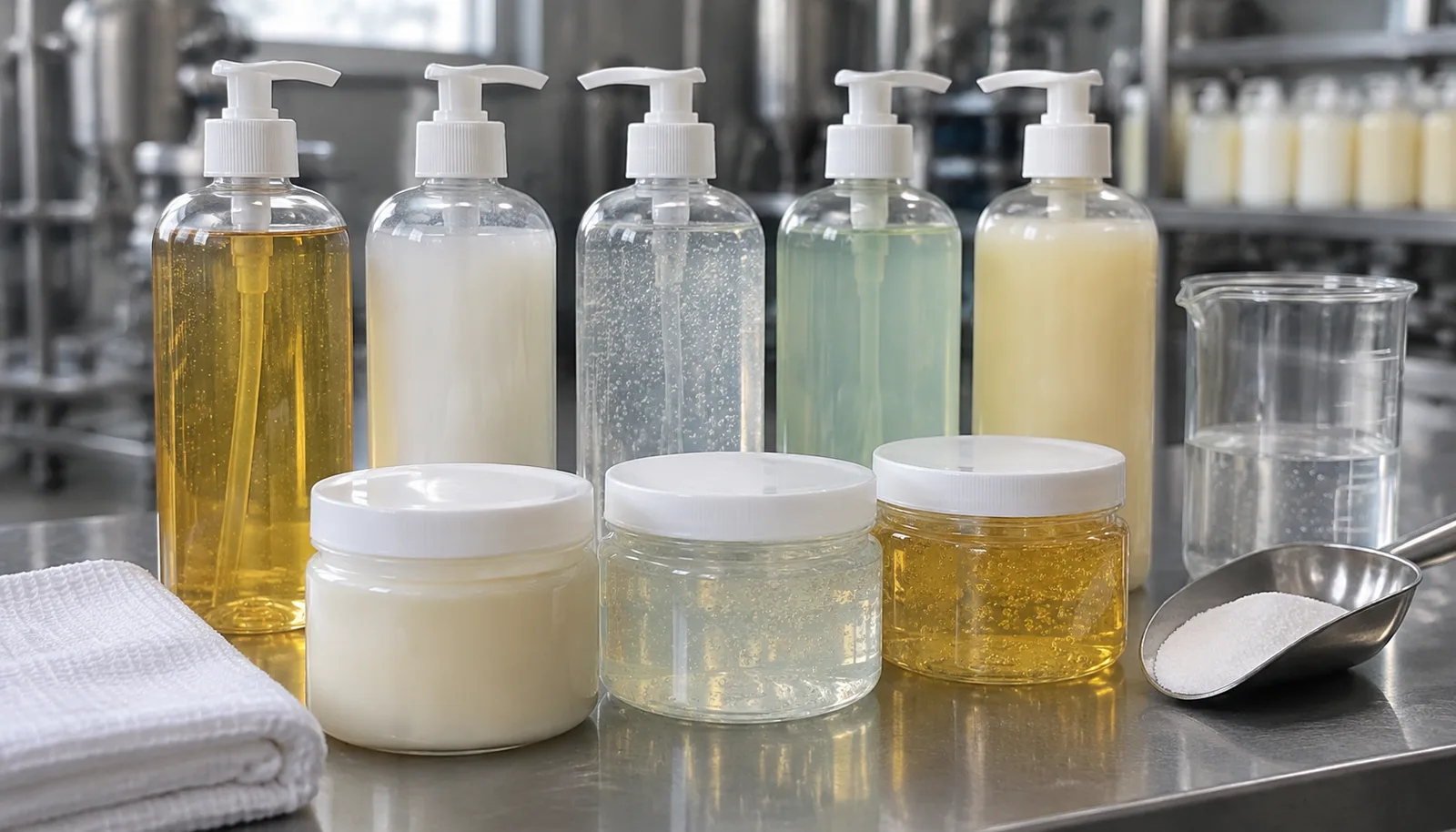
For a brief seeking a particular after-wash feel, ask what the supplier means by “conditioning”. Request the ingredient list and the product’s stated purpose, then decide which characteristics the trial should examine.
For example, a hypothetical trial sheet could ask the maker to record ease of rinsing, wet-hair feel and dry-hair feel. These are observations to collect, not benefits to promise in advance. Record the preparation and any additions alongside those observations.
Compare candidates against the same written brief. If the intended product will be used unchanged, assess that version. If additions are proposed, request instructions for that preparation before treating the original sample as representative of the intended product.
5. A soap-based shampoo option
If a candidate is described as soap-based, ask the supplier to identify its ingredients and explain its intended preparation and use. Avoid choosing it solely because the description fits a preferred brand theme.
Set out the comparison questions before preparing a sample. What instructions accompany it? Is it intended for use unchanged? What ingredient information is provided? What does the proposed finished product need to demonstrate in a trial?
Keep conclusions tied to the sample actually assessed. A useful comparison records what was prepared and observed, while leaving unanswered questions visible. A product description should not become a substitute for those records.
Ingredient information for an Australian product
For an Australian small brand, ingredient labelling belongs in the purchasing discussion. The Product Safety Australia cosmetics ingredients labelling overview includes preparations intended for contact with external parts of the body for purposes including cleansing and perfuming. It says ingredient information should be available to consumers at the point of sale.
The overview states that the ingredient list must appear on the container, or on the product when there is no container. Where the size, shape or nature prevents that placement, the information should be prominently displayed alongside the product.
It also describes two permitted approaches to ingredient order. Ingredients can appear in descending order by mass or volume, with colour additives last. Alternatively, ingredients other than colours at concentrations of 1% or more can appear in descending order, followed by those below 1% in any order, then colour additives in any order.
Product Safety Australia identifies its page as an overview, rather than a complete compliance guide. For a proposed Australian product, use it to identify labelling questions and consult the full standard it references before finalising the packaging.
Make the final comparison specific
Choose among the five briefs using a short record for each candidate: intended preparation, supplier instructions, quoted cost, proposed additions and ingredient information. Keep missing answers marked as questions rather than filling them with assumptions.
Before committing to a larger quantity, place the proposed recipe beside the proposed label. Can every ingredient in that recipe be accounted for in the information being prepared for the shopper? Resolve that question for the exact version intended for bottling.